
Kitchen Renovation Budgets: Where Should You Spend?
A kitchen budget becomes useful when it is attached to a clear set of priorities. Without that, it is easy to spend on highly visible finishes while leaving the awkward layout untouched, or to commit to building work before understanding what will remain for cabinetry and appliances.
There is no single kitchen that can be delivered at every budget. There are, however, different levels of intervention. Distinguishing between a refresh, a selective renovation and a complete reconfiguration allows a more honest conversation about what the available resources can achieve.
Decide what the work needs to change
Write down the practical shortcomings before collecting finishes. Perhaps preparation space is limited, a corner cabinet is difficult to reach, or circulation cuts between the sink and the hob. Some problems can be resolved through fittings and storage; others are embedded in the plan.
Replacing cabinet fronts may be a sensible choice when the layout and underlying construction work well. It is unlikely to solve a fundamentally misplaced appliance or an island that blocks the room. Where moving services or changing openings is being considered, obtain appropriate professional advice and realistic costs before making the rest of the selections.
Find the quality that is already there
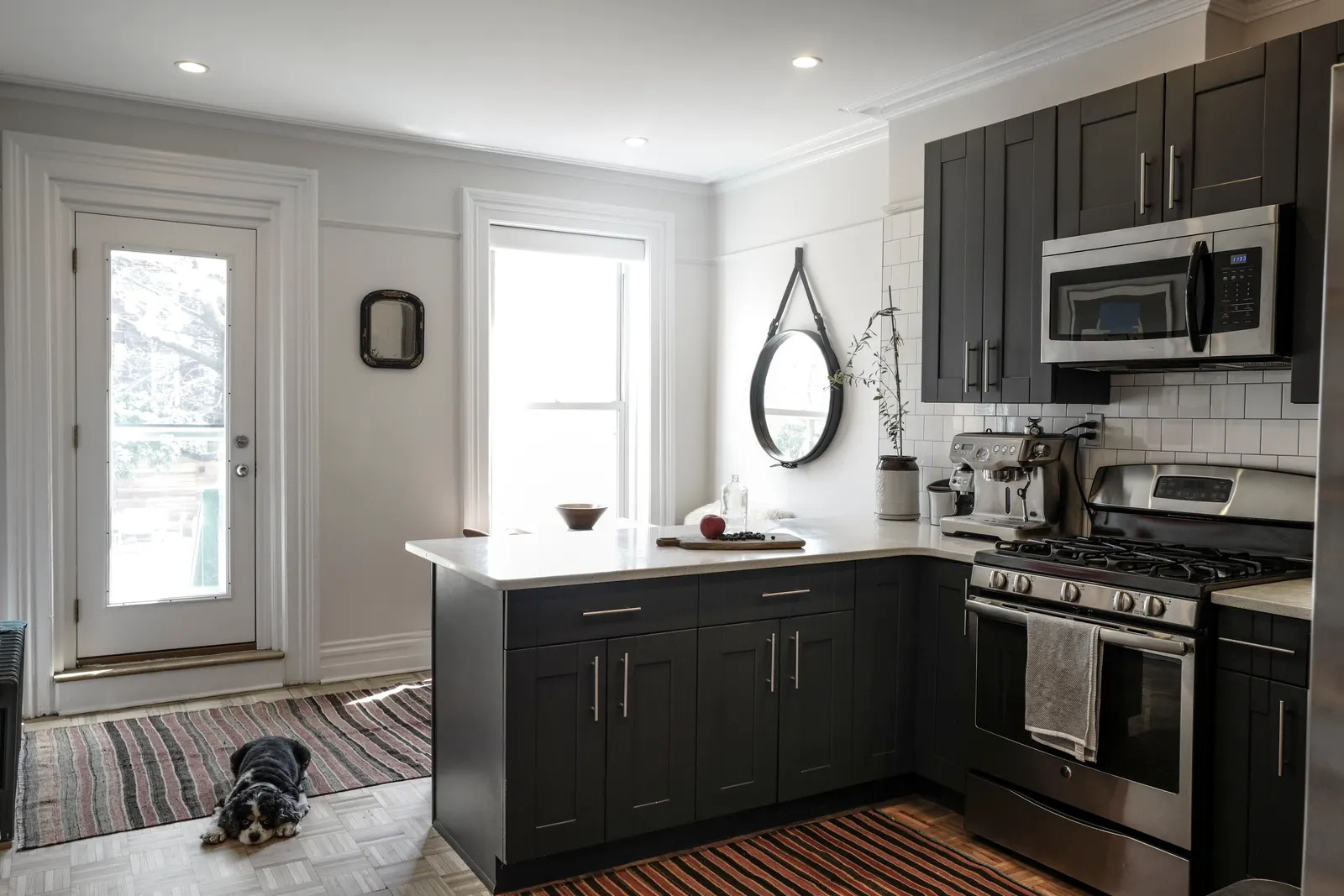
Age is not enough to judge cabinetry. Examine construction, alignment, hardware and the condition of the internal surfaces. Well-made millwork can sometimes support a substantial change of atmosphere without being replaced. In our own Easton home, we retained the existing kitchen cabinetry and original Gaggenau appliances while introducing contemporary updates around them.
Retention should be an informed choice, not a rule. A damaged cabinet, poorly functioning appliance or unsuitable worktop may warrant replacement. The important distinction is between something that looks dated and something that no longer serves the household.
Spend where precision matters
Custom work can make sense where standard dimensions leave unusable gaps or where a particular storage need drives the brief. It is not automatically the best answer everywhere. Compare the actual construction, finish, hardware, installation and complete cost of the options rather than deciding from the label alone.
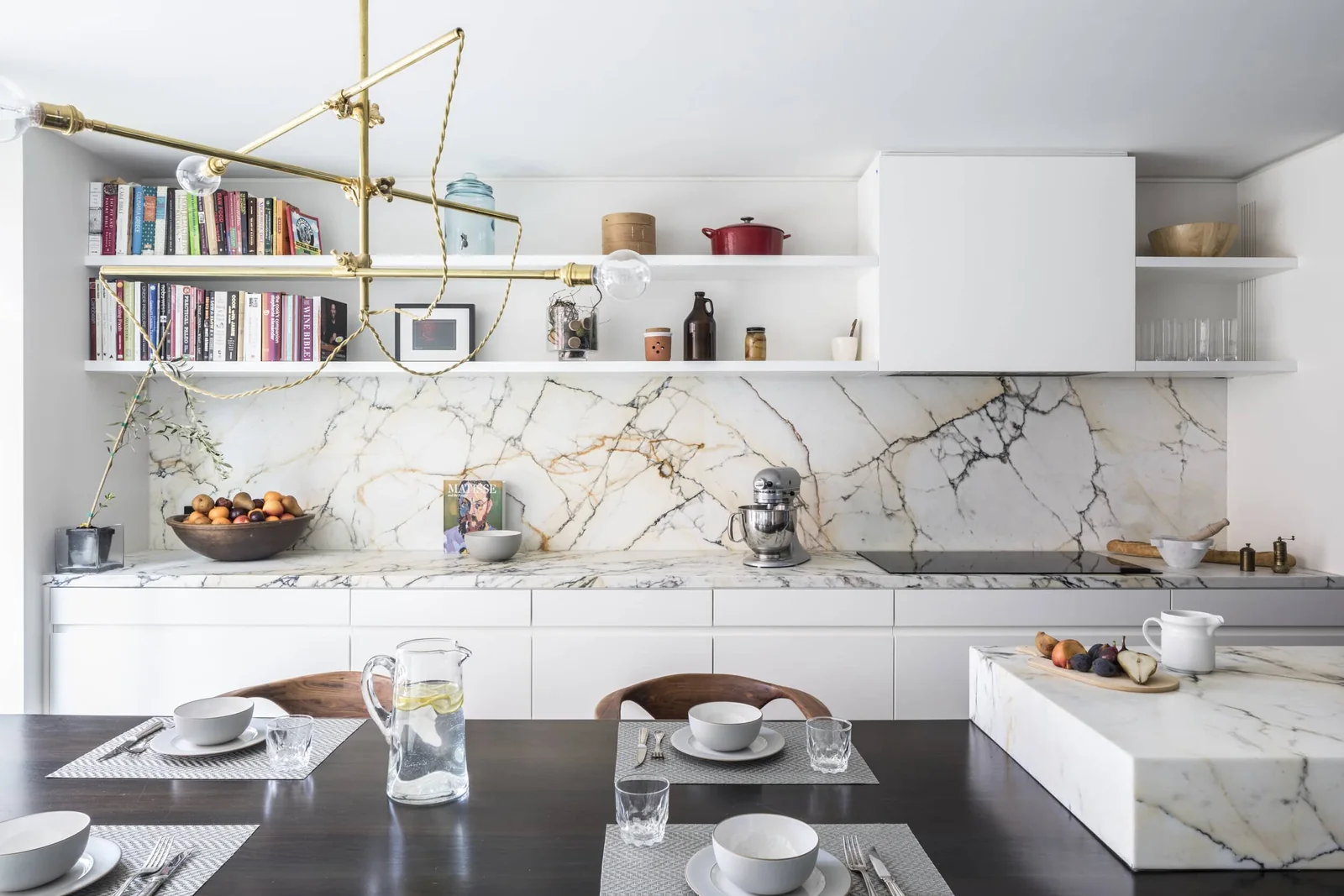
Allow the design to be quieter in places where an expensive gesture adds little. A carefully chosen surface and a well-proportioned cabinet can be more convincing than several competing features. Equally, a distinctive stone may justify its place if the rest of the composition gives it room and the maintenance suits the owners.
Understand the complete commitment
A cabinet price is only one part of a renovation. Installation, building work, services, lighting, delivery and the finishing trades need to be understood alongside it. Discuss allowances for unknown existing conditions and keep a record of decisions that change the scope. An early budget should be developed with the team, rather than treated as a fixed promise before investigation.
For our Cedar project in Southport, evaluating where to invest was central to renovating an older family home. The kitchen received a substantial transformation, while the work elsewhere was considered in relation to the whole budget. That judgement is often the most valuable part of kitchen design: knowing where change will matter, and where restraint will serve the project better.